


Why Rainwater Harvesting Makes Sense in New Zealand
New Zealand's moderate to high rainfall makes rainwater harvesting one of the smartest investments for property owners. Whether you're on town supply looking to reduce bills, on tank water as your sole source, or somewhere in between, capturing rain is practical, economical, and increasingly essential.
Tip: Track your first tank through a season - note how quickly it fills, how long it lasts, and where you could use more water. This real-world data beats any calculation for planning your next expansion.
Getting Started
Start with one garden tank and experience the satisfaction of water independence. Many customers begin with a 1,000-2,000L tank and expand once they see how quickly it fills and how useful the water becomes. Rain Reserve offers multi-tank discounts for those ready to scale up.
Over 50 years, we've helped thousands of Kiwis harvest their own water. Whether you're taking the first step toward sustainability or designing a complete off-grid system, we're here to help.
Rainwater is naturally soft, free from chlorine and other treatment chemicals, and ideal for gardens, car washing, and household use. Properties with rainwater systems typically see 40-60% reductions in mains water consumption. For rural properties without town supply, a well-designed system provides reliable, clean water year-round.
Modern rainwater tanks are safe for drinking water when properly maintained, meeting strict AS/NZS 4020 potable water standards. With council water prices rising and summer restrictions becoming common, your rainwater system pays for itself while providing water security.
The Benefits


Your roof is a surprisingly effective catchment area. A simple calculation: 1mm of rain on 1m² of roof = 1 litre of water.
Example: A 150m² roof in Auckland (average 1,200mm annual rainfall):
-
150m² x 1,200mm = 180,000 litres per year
-
That's enough to fill a 5,000L tank 36 times annually
Even accounting for dry spells and overflow, most Auckland homes can harvest 60-80% of their water needs from rainfall.
How Much Water Can You Collect?
For garden irrigation only, calculate your summer watering needs and aim for 2-3 months of storage. For household use, consider:
-
2-person household: 5,000-10,000L minimum
-
4-person household: 15,000-25,000L recommended
-
Off-grid/sole supply: 30,000L+ with multiple tanks
Choosing the Right Tank Size
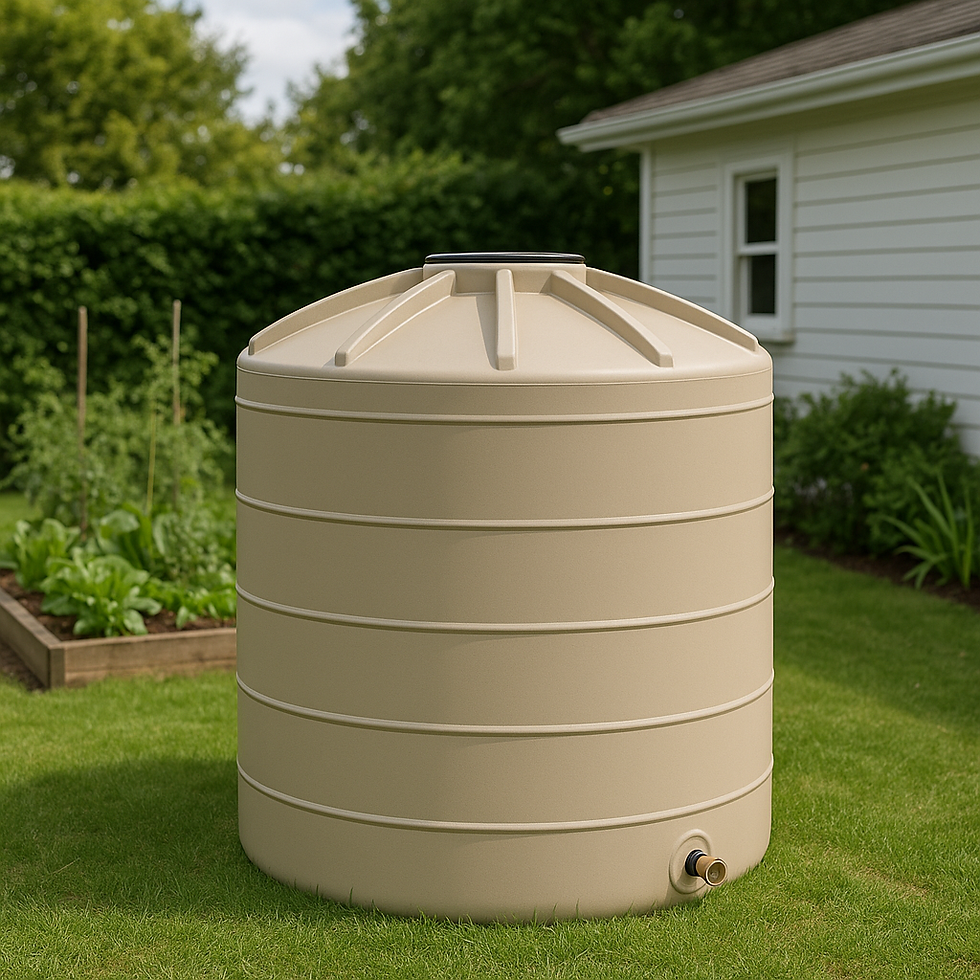

A complete rainwater harvesting system includes:
-
Roof catchment - Your existing roof (metal roofs are ideal)
-
Gutters and downpipes - Keep them clear of debris
-
First flush diverter - Diverts the first dirty water away (our downpipe diverter handles this)
-
Water tank - Sized appropriately for your needs
-
Overflow system - Prevents tank overfilling (vent kits protect dome integrity)
-
Pump (if required) - For mains pressure or elevated locations
-
Filtration (optional) - For drinking water applications
System Components
Garden tanks: Position close to downpipes on level, compacted ground. Our tanks fit most locations, and installation typically takes 1-2 hours with a downpipe diverter.
Large tanks: Require stable base (concrete pad or compacted aggregate). Can be partially buried (up to 500mm) for lower profile. Professional installation recommended for 10,000L+ sizes.
Installation Basics


Rainwater systems are remarkably low-maintenance:
-
Check gutters 2-3 times annually
-
Inspect tank annually for sediment
-
Clean filters as needed
-
Ensure overflow is clear
With proper setup, your Rain Reserve tank will harvest water reliably for decades with minimal intervention.

